
Mobile vs Fixed Stacker Conveyor: Which Fits Your Site?
- Updated 2026-11-20
- Source:
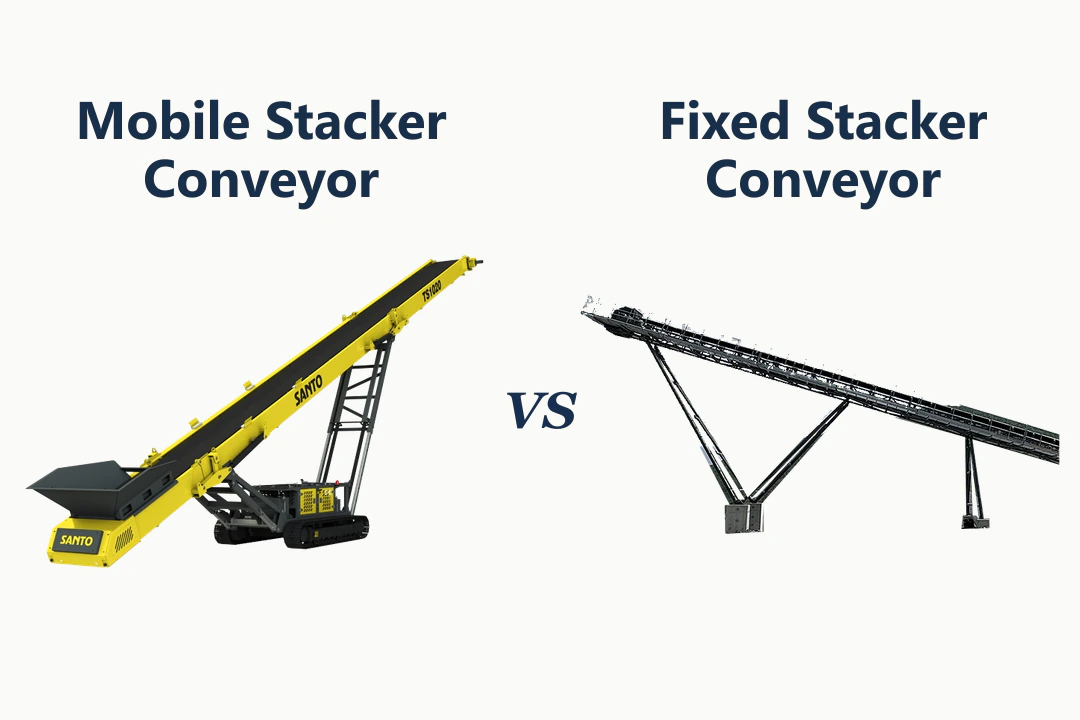
Depends on the feed point. If your screen moves with the quarry face, or one machine must use separate yards, shortlist a mobile stacker conveyor. If the feed point stays in place, see whether a fixed stacker conveyor can reach every planned pile.
Even when you need several piles, a radial boom may reach them all from one installation.
What is the difference between a mobile and fixed stacker conveyor?
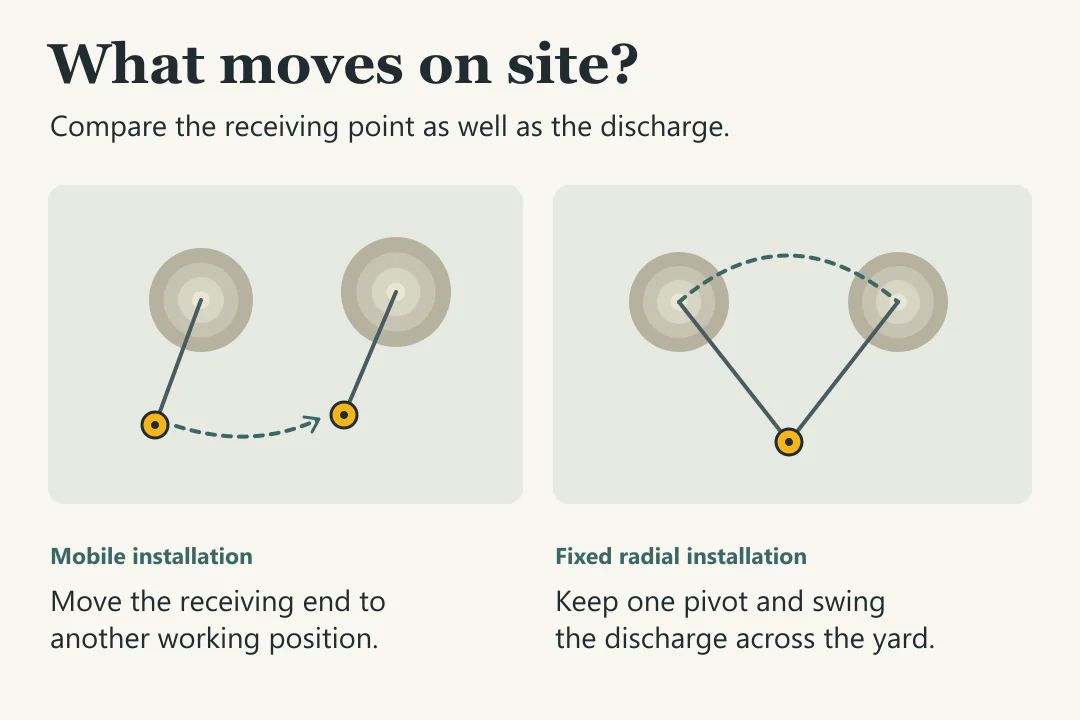
A mobile stacker conveyor can move its receiving end and discharge end to a new working position. A fixed stacker conveyor receives material at a designated installation point. Its boom may discharge in one spot or sweep across several pile sectors.
Fixed installation is where the machine works. Fixed length means the boom keeps the same length. A mobile stacker can have a fixed-length boom, and a stationary stacker can have a telescopic boom. You can ask the supplier to show which parts move on the layout drawing.
| Site question | Mobile stacker | Fixed stacker |
|---|---|---|
| Where can it receive material? | Under a screen discharge or alongside a mobile feeder, wherever the discharge stream can enter the receiving hopper centrally. | At the designed transfer point, typically under a feed conveyor or chute. |
| Which piles can it build? | Those within stacking range at each workable position. Check how the crew will feed the conveyor after each move. | Those within its discharge envelope. A fixed discharge serves one location. A radial conveyor can serve several stockpiling sectors from one pivot. |
| What site work does it need? | A suitable travel surface, operating supports, clearance and a power arrangement at each position. | Foundations or supports, a permanent feed interface, power and maintenance access. |
| What can interrupt production? | Disconnecting, relocating, realigning and restarting the machine. | Reaching the yard’s usable stockpiling capacity or modifying the conveyor line when the storage area changes. |
When is a mobile stacker more suitable?
Choose a mobile stacker when moving it avoids repeated loader trips and the saving covers the cost of move. For example, if a screen equipment advances with a quarry face, a tracked stockpiler conveyor can follow it and build a finished pile beside it. Compare that move with the loader trips needed to carry the same tonnage to a fixed conveyor.
Calculate one complete move from the last tonne at the old position to steady feed at the new one. Include the time of clearing the belt, arranging towing equipment if needed, managing cables and aligning the receiving hopper. Price the staff and equipment time for that move.
On the other side of comparison, calculate loader hours it saves before screen moves again. A tracked conveyor may cover the distance under its own power, but the move still takes planning if a separate hopper feeder must travel with it.
For moves within one yard, check turning space, surface condition and support loads at each destination. For moves between quarries, also get the folded dimensions, transport weight and trailer requirements. Once you know the movement pattern, use this comparison of tracked and wheeled conveyors to assess the chassis.
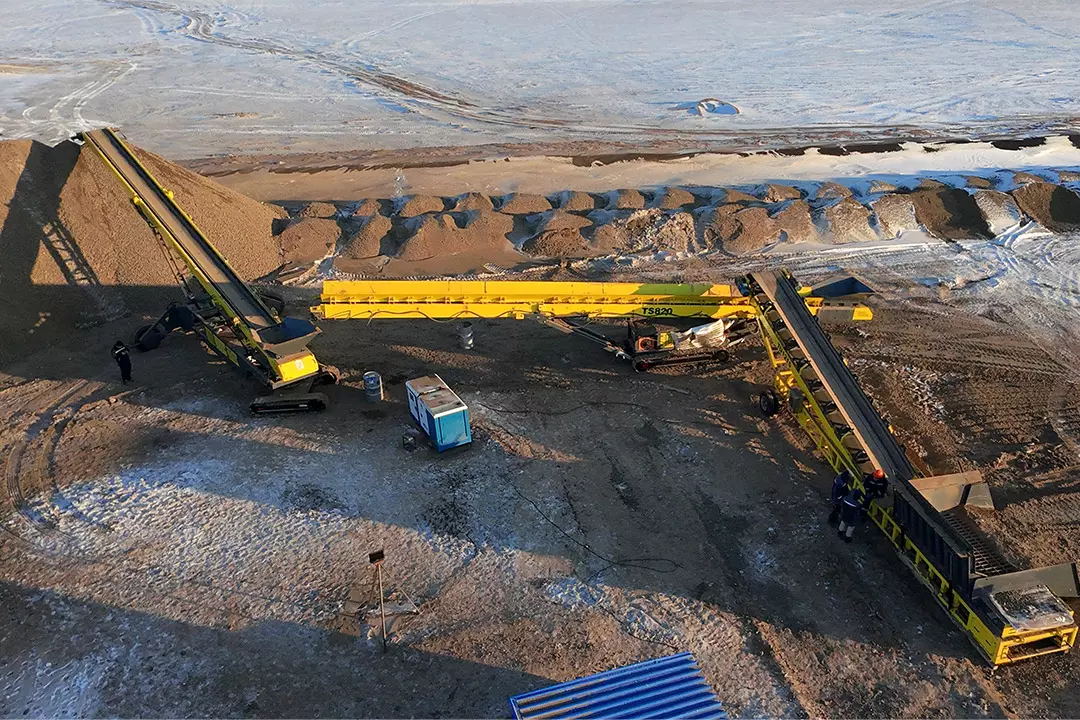
Mobile stacking conveyor for mine aggregates
When should you choose a fixed stacker conveyor?
Choose a fixed stacker when a permanent feed point can serve the planned storage area through the project’s expected life. Fixed stacking conveyors suit a finishing line that delivers the same grade to the same part of the yard every shift. Check whether trucks waiting for collection could block the loader’s route to the pile.
If the new storage area lies across a haul road, price the extension, extra transfer or mobile terminal section before committing to permanent works. Include access for belt repairs and chute cleaning in both layouts.
Mobile and fixed stacker feed points layout
Can a fixed stacker build multiple stockpiles?
Yes. A fixed radial stacker can build separate piles from one feed point when its discharge arc reaches each pile and the yard leaves enough space between grades. A simple fixed-discharge conveyor builds beneath one discharge point.
A fixed-length boom places material along that arc at a given elevation. A telescopic boom also changes the distance from the pivot to the discharge. Ask the supplier to plot the minimum and maximum telescopic reach at your required stacking height. A boom that reaches the far bay at a low angle may fall short when you raise it to clear a full pile.
Two discharge points may fit while the toes overlap, mixing grades or closing the reclaim lane. Check where material already on the belt will go during a grade change. SANTO’s guide to radial telescopic conveyor explains the movements to look for on the supplier’s drawing.
Can mobile and fixed conveyors deliver the same stacking capacity?
Yes. Either design can meet the same tonnes-per-hour target when its belt, drive, receiving section and discharge suit the material and peak feed rate. Compare the two offers at the same bulk density, maximum lump size, moisture condition and operating incline.
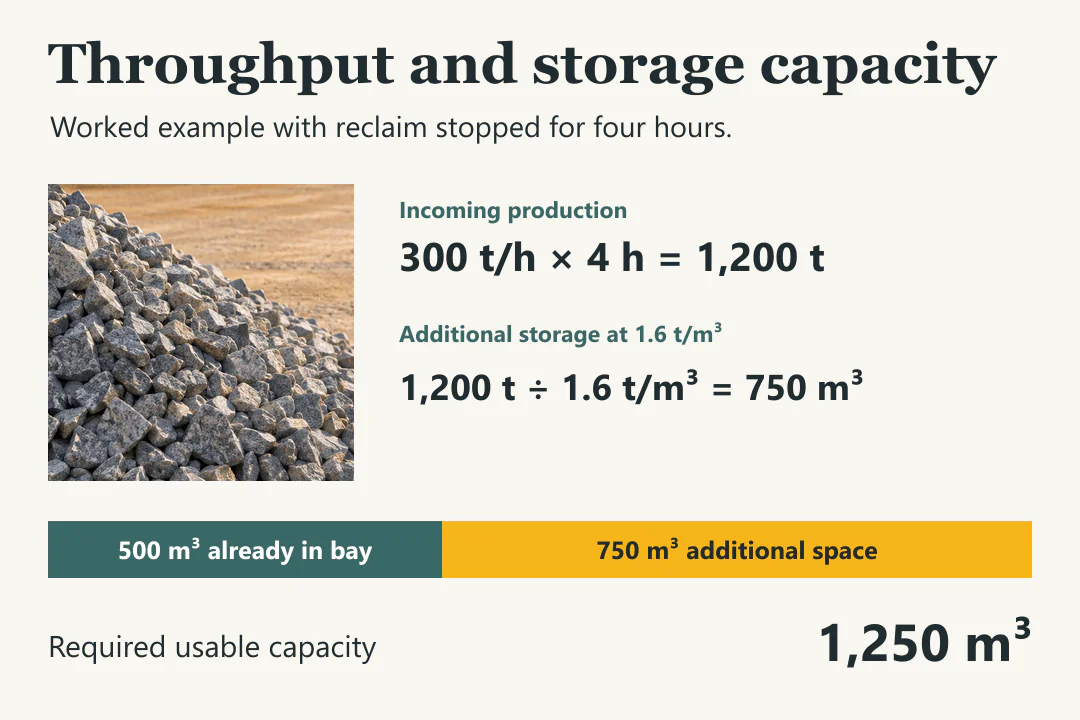
A conveyor has a delivery rate in tonnes per hour (t/h). A yard has room for a quantity of stock. Specify both conveyor capacity and usable stockpiling capacity on the enquiry. To convert usable pile volume into tonnes, multiply cubic metres by loose bulk density in t/m³.
For example, a plant stacking 300 t/h for four hours needs room for 1,200 additional tonnes while reclaim stops. At an assumed density of 1.6 t/m³, that requires 750 m³ of available storage. If that storage bay already holds 500 m³, it needs room for the existing pile plus the additional 750 m³.
In SANTO’s Kazakhstan copper ore stacking project, trucks feed a TU1215 unloader, a TS820 tracked conveyor transfers the ore and a TS820R radial stacker builds the pile. The system handles more than 300 t/h and reaches a maximum stacking height of over 8 m. Use those figures to compare complete handling lines.
At AES Kilroot in Northern Ireland, Telestack reports coal stockpiling at up to 500 t/h at a bulk density of 1.0 t/m³. A wheel loader charges the tracked mobile hopper feeder, which supplies the radial telescopic conveyor.
Telestack gives both the rate and the density behind it. Ask bidders to do the same for your bulk materials. At the low end of your density range, the conveyor must carry more volume to deliver the same tonnes per hour.
Calculate stacking capacity and stockpile volume
Which stacker costs less per tonne over the life of the project?
Mobile conveyors can cost less per tonne when they eliminate regular loader rehandling. Fixed conveyors can cost less when one installation serves the same production line for years. Compare both over the same project life, production schedule and annual tonnage.
Cost per tonne = (purchase and installation + operating and relocation costs + layout changes + removal costs − residual value) ÷ total tonnes stacked over the same period.
| Cost to compare | What to include |
|---|---|
| Installed cost | Equipment, freight, pads or foundations, electrical work, transfers, commissioning and any tow equipment the site must buy. |
| Operating cost | Power or fuel, labour, wear parts, planned maintenance and loader time for rehandling. Measure the loader route for each layout. |
| Cost of change | Crew time for each move, transport between sites, future extensions, added transfer points and any extra shifts needed to recover production. |
| End of project | Dismantling, removal and reinstatement costs, less realistic resale or reuse value. |
Can a mobile stacker work with a fixed conveyor system?
Yes. A fixed conveyor can carry material along a permanent route while a mobile stacker distributes it at the storage end. This layout suits a plant with a stable processing line and a finished-product yard that changes by season, grade or expansion phase.
Start at the transfer point. If the stacker pivots beneath a fixed head pulley, show how its receiving hopper stays under the discharge stream throughout the swing. A mobile conveyor can bridge the gap if its length and transfer heights work at both ends.
Where trucks or loaders deliver in batches, price a hopper feeder stacker and check its usable hopper volume against the largest delivery. Confirm that its feeder can meter the required flow onto the stacking belt.
Finally, whether you choose a mobile or fixed stacker conveyor, SANTO Machinery can provide the equipment that best suits your needs. Feel free to contact us at any time for customized solutions and pricing!
Technical references
- West River Conveyors — Fixed, Telescopic and Radial Stackers (PDF)
- SKE Industries — Fixed and Portable Telescopic Radial Stackers
- Superior Industries — How the TeleStacker Conveyor Builds Stockpiles
- Telestack — Coal Stockpiling and Reclaiming at AES Kilroot
- Martin Engineering — Controlling Spillage at Conveyor Transfer Points