
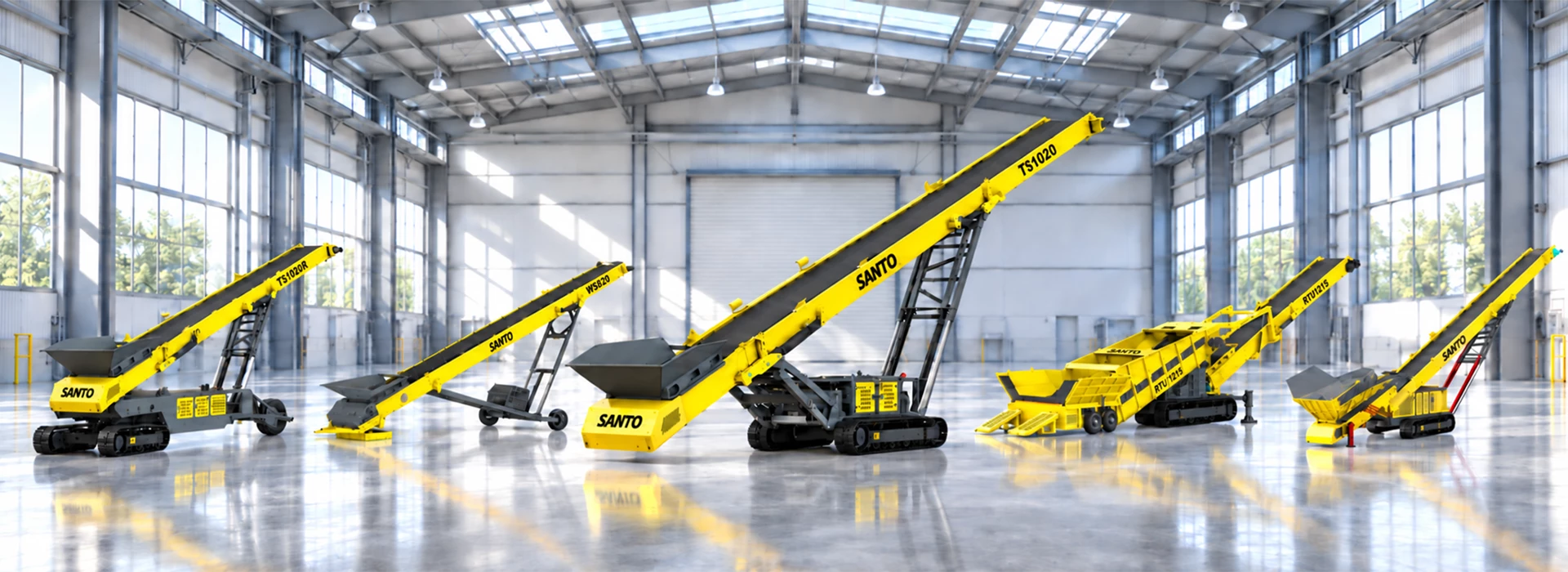
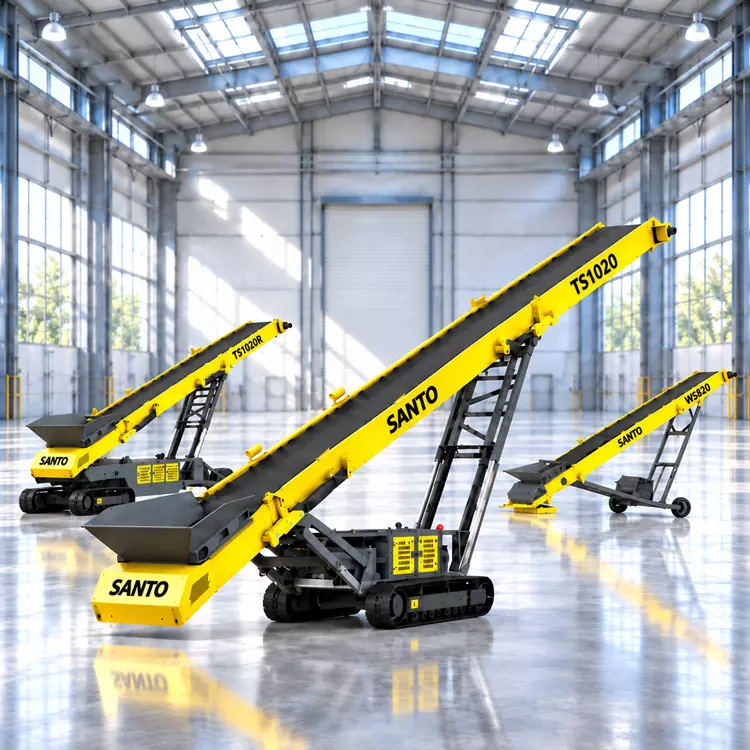
Mobile Stacking Conveyors for Sale
Mobile Conveyors and Stackers for Bulk Material Handling
Explore tracked and wheeled conveyors for mines, quarries, ports, terminals, recycling sites and storage yards. Each system can be configured around your feed method, duty and target stockpile.
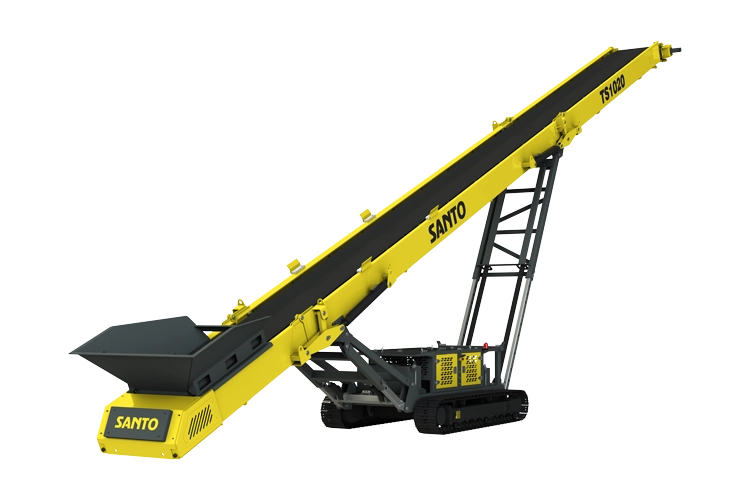
Tracked Stacker
Conveying Length: 15-30 m
Stacking Height: 6.5-13.4 m
Learn More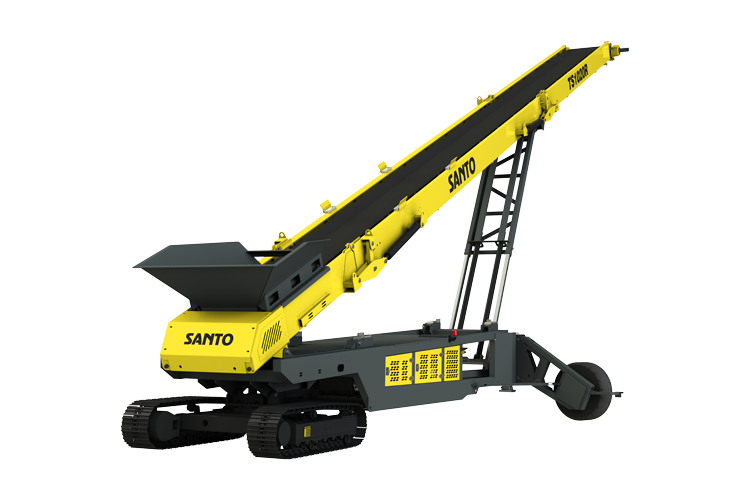
Tracked Radial Stacker
Conveying Length: 20-24 m
Stacking Height: 9.4-10.7 m
Learn More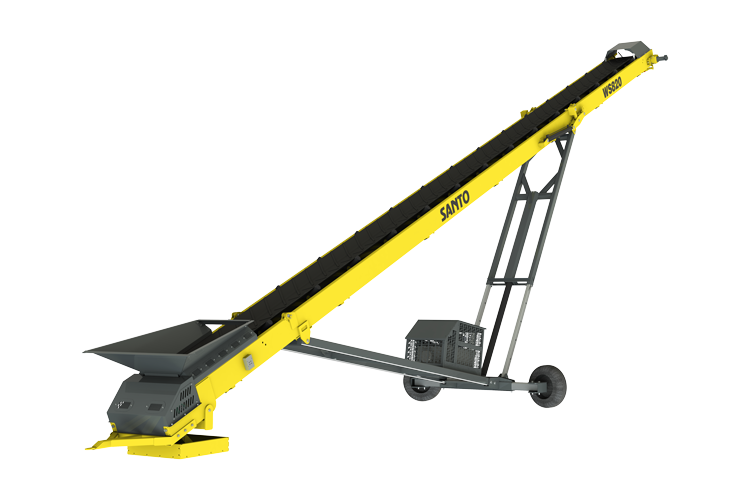
Mobile Wheeled Stacker
Conveying Length: 9-30 m
Stacking Height: 4.3-12.8 m
Learn More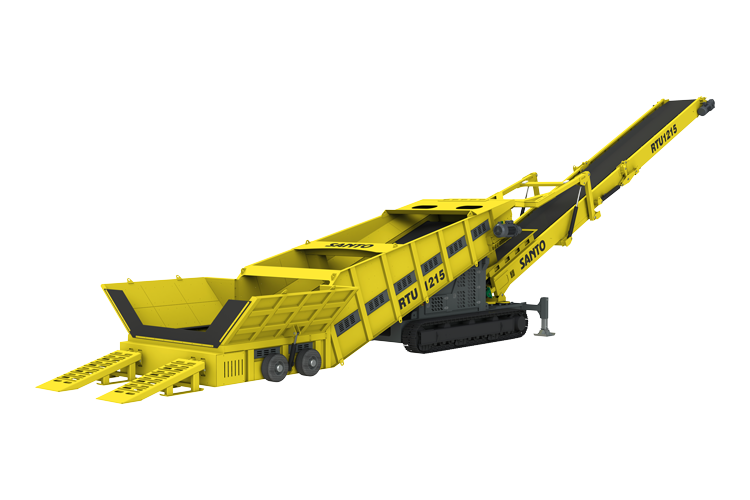
Radial Truck Unloader
Conveying Length: 15 m
Stacking Height: 7.1 m
Learn More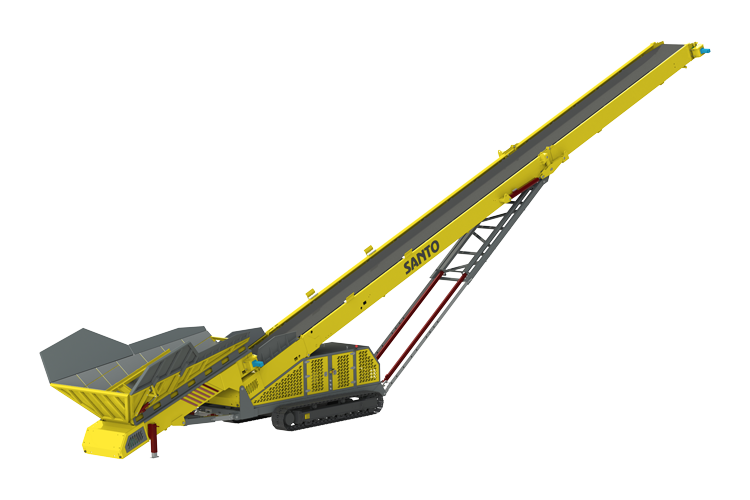
Low Feeder Track Stacker
Conveying Length: 20-24 m
Stacking Height: 8.3-9.8 m
Learn More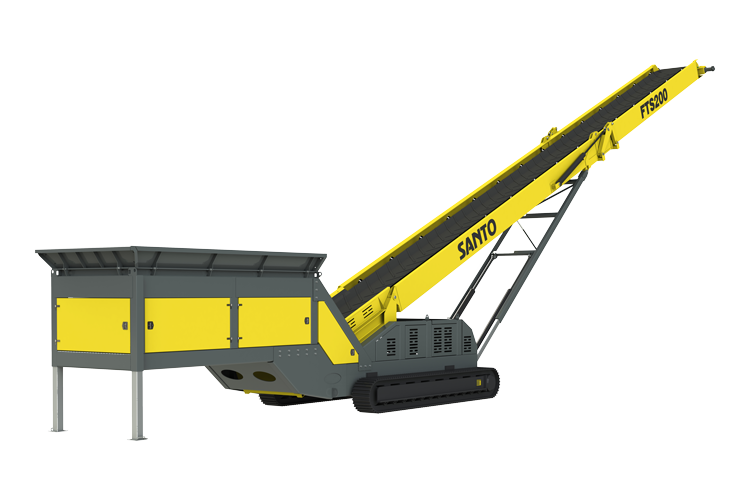
Feeder Track Stacker
Conveying Length: 15-20 m
Stacking Height: 7.0-8.9 m
Learn More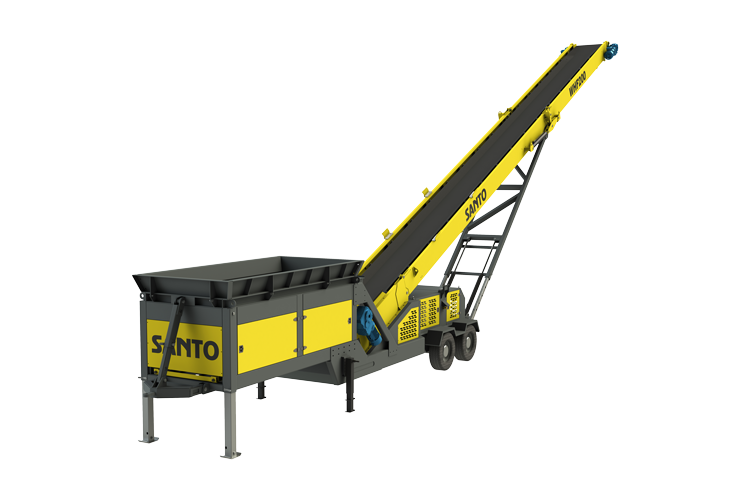
Wheeled Hopper Stacker
Conveying Length: 15-20 m
Stacking Height: 7.0-8.9 m
Learn More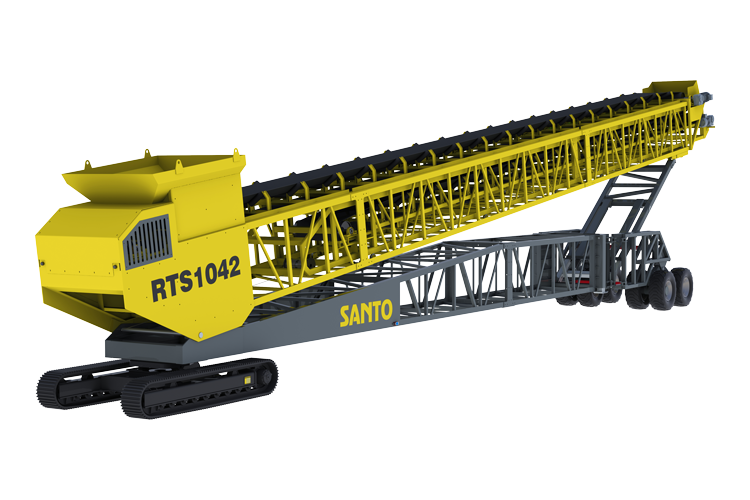
Radial Telescopic Stacker
Conveying Length: 42 m
Stacking Height: 14.5 m
Learn More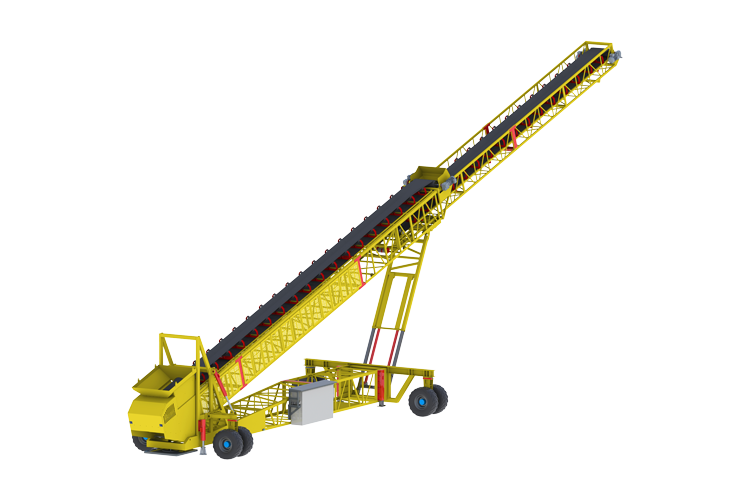
Wheeled Radial Telescopic Stacker
Conveying Length: 36-42 m
Stacking Height: 15.1-17.6 m
Learn More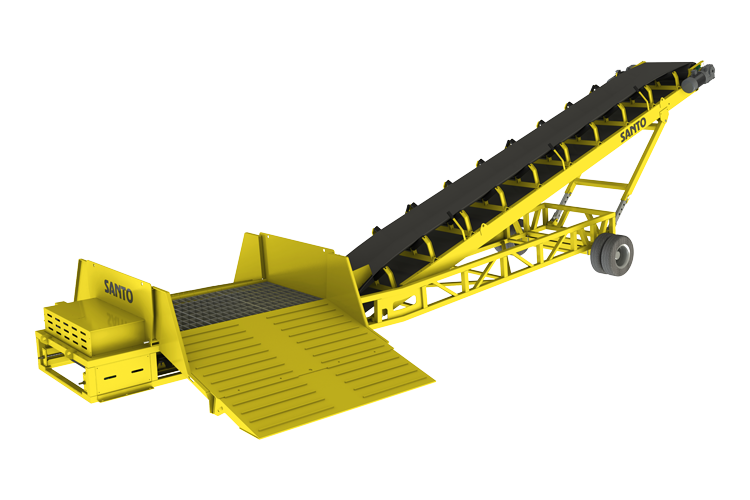
Wheeled Truck Unloader
Conveying Length: 15-18 m
Stacking Height: 4.1-5.1 m
Learn More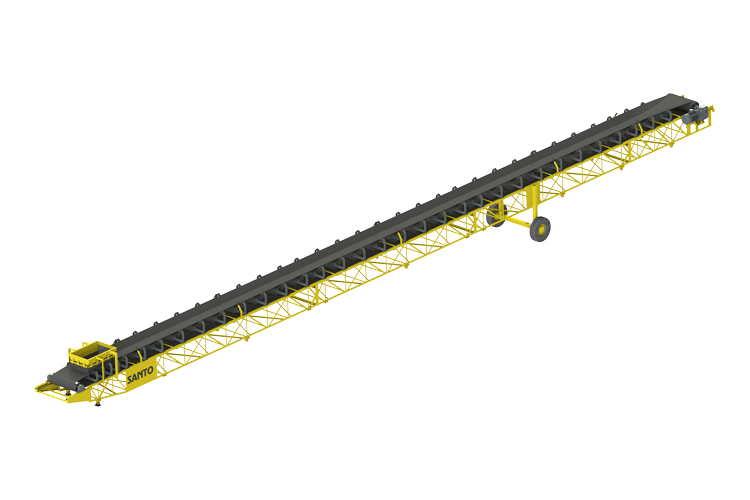
Grasshopper Conveyor
Conveying Length: 20-35 m
Stacking Height: 3.3-5.1 m
Learn MoreConveyor Solutions Around Your Operation
A product becomes useful only when it fits the complete material route. Explore how mobile conveyors can be arranged around receiving, transfer, stockpiling and loading duties in different industries.
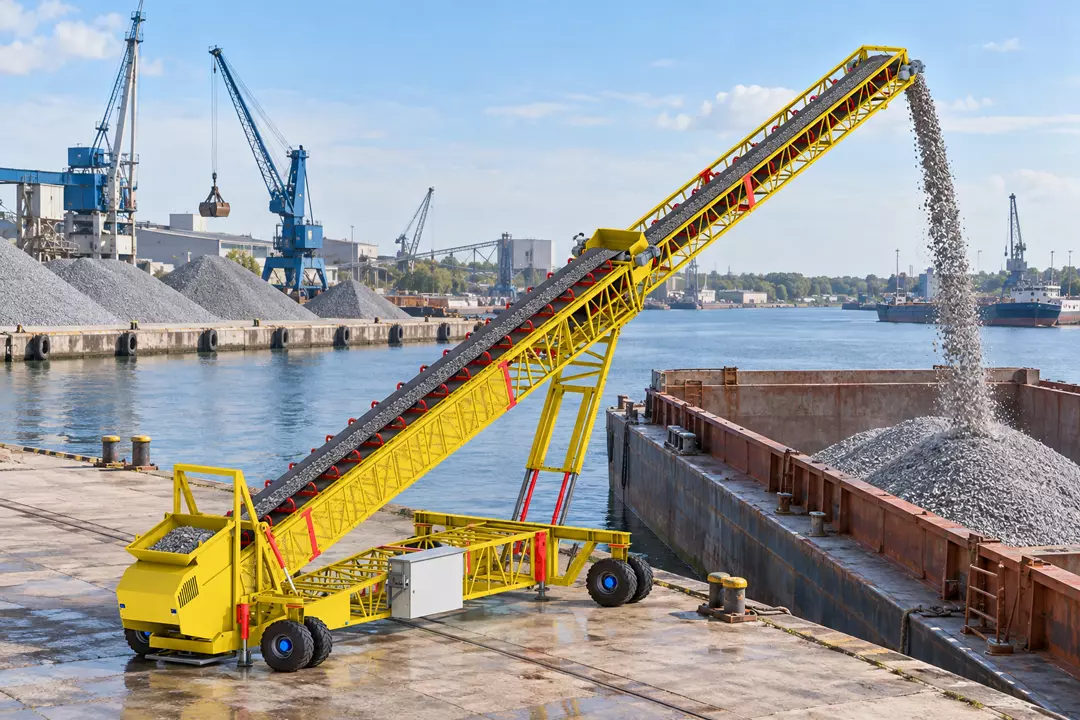
Ports and Terminals
Radial and telescopic designs support flexible vessel loading at ports and terminals.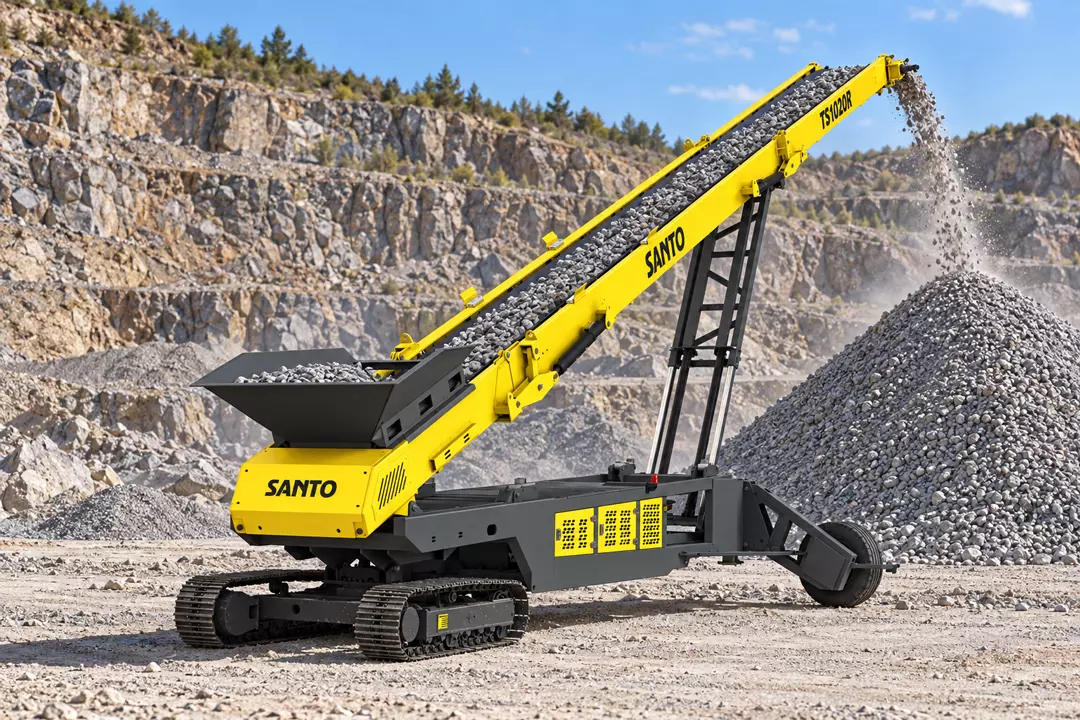
Quarry and Mining
Handle and stockpile aggregates with tracked and radial stackers, reduce double handling.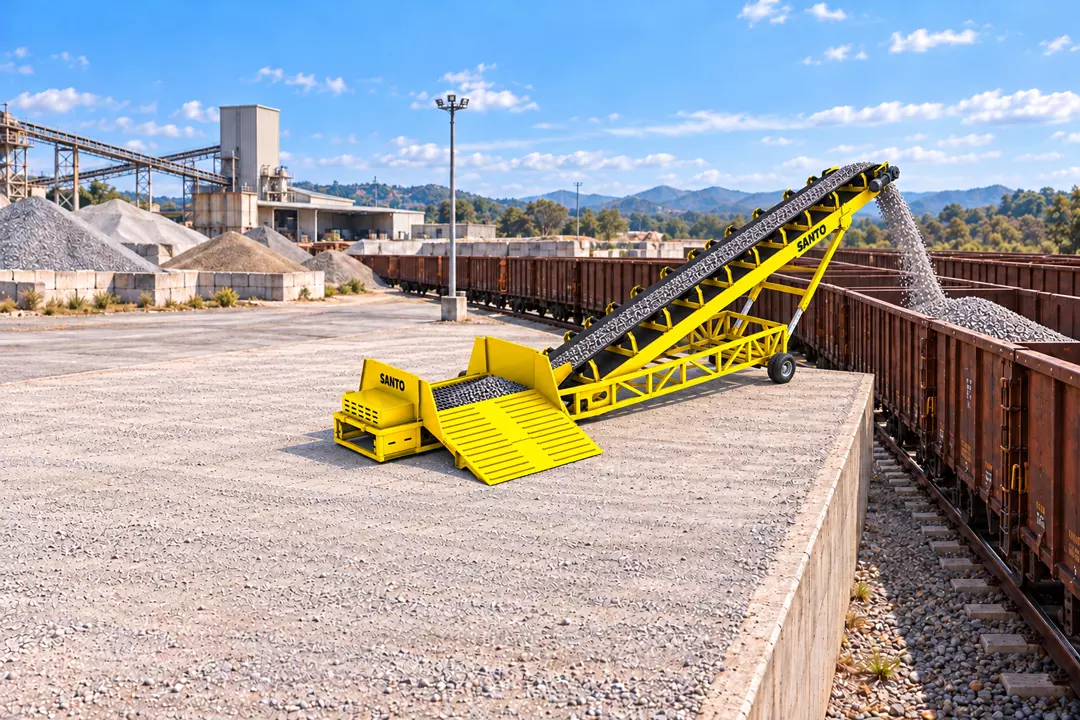
Rail Loading and Unloading
Wheeled truck unloaders receive bulk cargo directly and regulate feed into rail loading lines.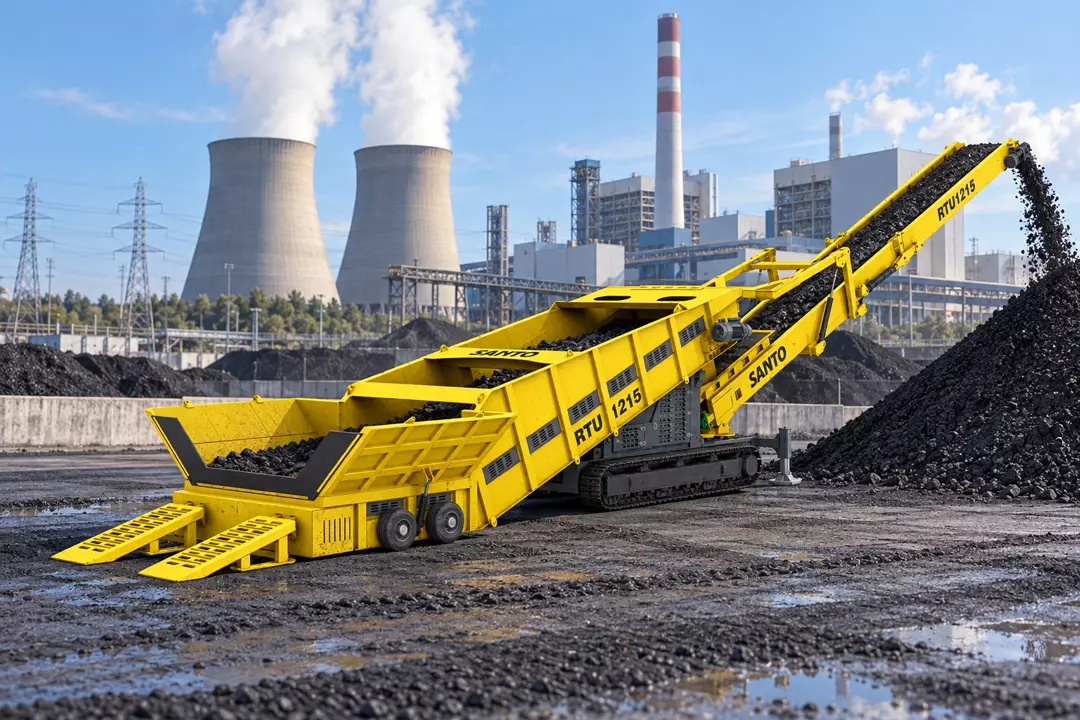
Energy and Power
Direct truck intake and radial discharge combine coal unloading and stockpiling in one machine.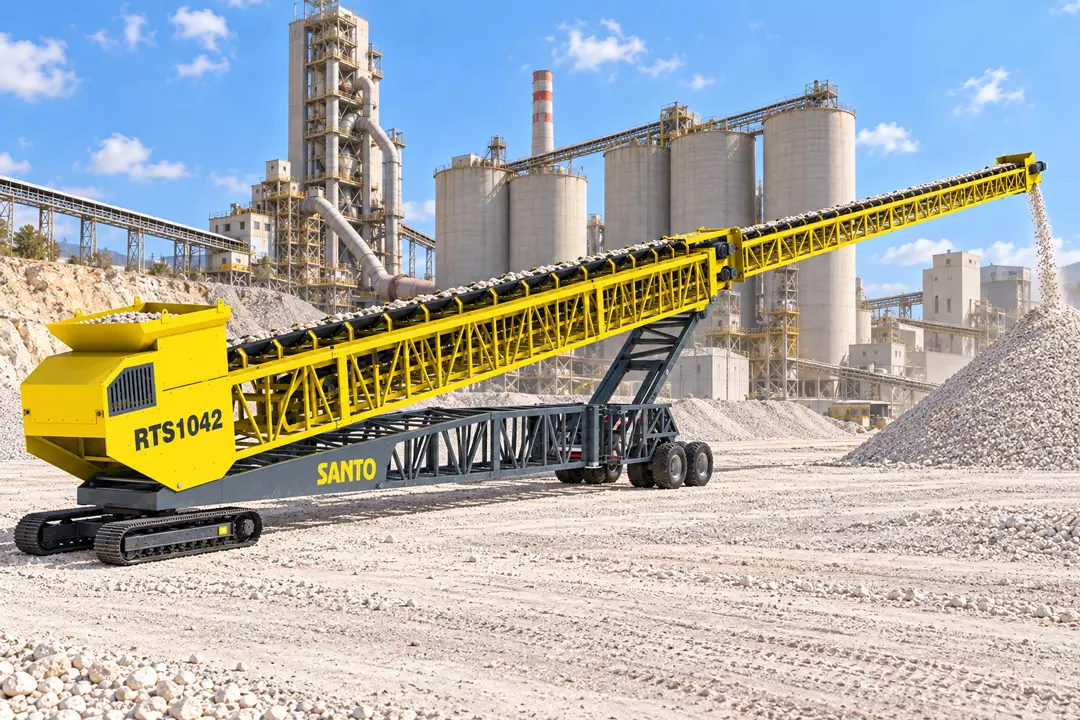
Cement Industry
Telescopic reach and radial travel distribute cement raw materials without moving the feed point.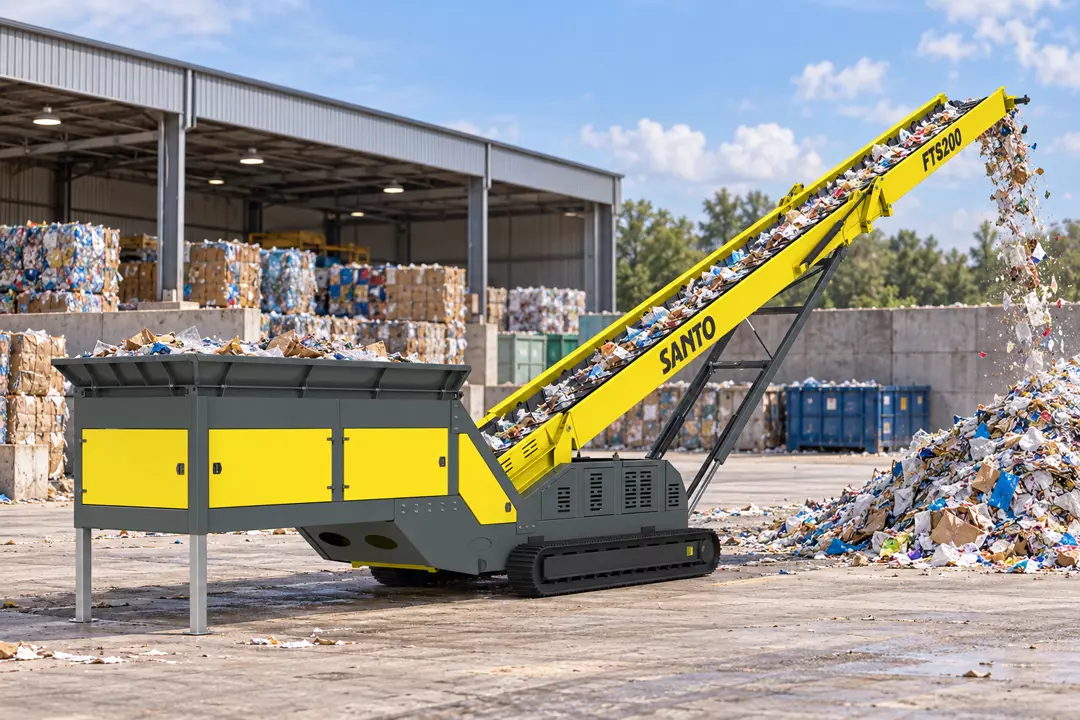
Waste Recycling
Variable-speed hopper feeding controls waste flow, while tracks allow recycling site relocation.Choose Conveyor Based on Solution
The best conveyor is not simply the longest or highest-capacity model. Start with how material enters the system, where it must discharge and how often the equipment needs to move.
Send a site plan, material data and target throughput. Our engineers use these inputs to narrow the product family before confirming belt width, conveyor geometry and power configuration.
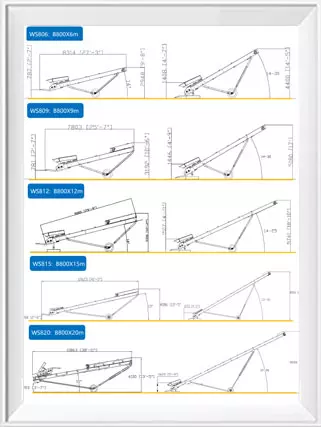
Share bulk density, maximum lump size, moisture, temperature and abrasiveness so the belt, hopper and wear protection suit the duty.
Define normal and peak tonnes per hour together with upstream feed variation to prevent an undersized or unnecessarily large system.
Confirm travel routes, gradients, ground bearing conditions, available power and the space needed for safe equipment movement.
Set stockpile height, radial coverage, downstream feed point and segregation limits to define the required conveyor geometry.
Why Choose a Mobile Stacker?
More Safety
Increase site safety by reducing traffic levels and limiting the use of loaders to create stockpiles.
Enhanced Efficiency and Productivity
By streamlining the material transfer process, the stacker significantly improves efficiency and productivity.
Cost Savings
Removing or reducing loading-shovel movement lowers operating costs and the handling cost per tonne.
Versatility and Flexibility
Mobile stackers can work across construction, mining and other bulk-handling sites, then relocate as the project or material route changes.
Environmental Considerations
Less transport equipment on site and more efficient material movement can improve energy consumption per handled tonne.
Easy to Transport
Mobile conveyors fold hydraulically for transport and can be moved between sites on a suitable lowboy trailer.
From Operating Data to a Working Conveyor
A clear engineering sequence keeps equipment selection tied to the actual project rather than a generic model recommendation.
Confirm material, capacity, feed source, discharge target and site movement requirements.
Select mobility, belt width, conveyor length, hopper, power and control arrangement.
Build against the approved configuration and inspect key assemblies before delivery.
Provide installation guidance, commissioning communication and lifecycle parts support.
Equipment Backed by Engineering Support
SANTO designs and manufactures mobile conveyor systems around real materials and site constraints. Our engineering team supports configuration, manufacturing, installation guidance, commissioning and spare parts supply.
Structural design, component selection and workshop inspection are coordinated within one engineering and manufacturing system, helping the delivered machine match the confirmed operating duty.
Plan Your Mobile Conveyor Project
Use these answers to prepare the operating information needed for an accurate equipment recommendation.
- Material specification
- Site photos or layout drawing
- Required capacity and stockpile size
- Available power and project country
The selection depends on material density and size, required throughput, feed method, travel conditions, conveyor length and stockpile geometry. Share these details so the equipment can be sized around the duty.
Provide the material, target capacity, feed height, conveyor length, discharge height, power preference, project country and photos or drawings of the working area.
Tracked equipment suits frequent self-propelled movement and uneven ground. Wheeled equipment is often suitable when machines are towed between prepared positions.
Length, belt width, hopper, mobility, power system, controls and discharge arrangement can be configured according to the confirmed operating conditions.
SANTO supports installation guidance, commissioning, operator communication and ongoing parts supply throughout the equipment lifecycle.
Tell us what you need to handle
Get a Project-specific Recommendation
Share your material, capacity and site conditions.